


Nobody cancels an appointment they never booked.That is the part that does not show in the data. Cancellations get tracked. No-shows get flagged. But the patient who called at 11:43am on a Wednesday, waited twenty seconds, and hung up – that person is completely invisible to your operation.They did not complain. They did not leave a voicemail. They just quietly removed themselves from your schedule before they were ever on it.Multiply that by five days a week, fifty weeks a year, across every location you run – and the number stops feeling small. That is the gap call tracking software was built to close.
Why Appointments Slip Through – and Nobody Notices
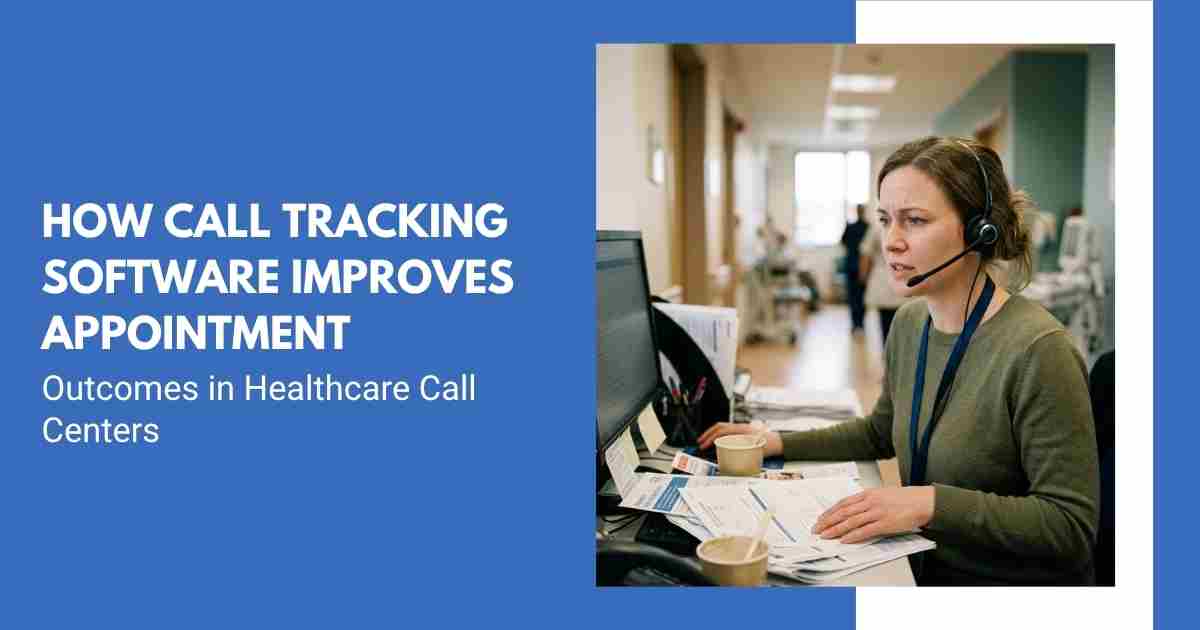
The problem is structural, not personal. Healthcare call centers handle high volumes of emotionally loaded calls – appointment bookings, referral queries, test results, prescription requests.When the volume spikes – say, Tuesday morning after a long weekend – calls stack up faster than they can be answered. Some patients hold. Others hang up within seconds. Most do not call back.What makes this worse is the absence of accountability – not on the part of staff, but on the part of the system. If a call goes unanswered and nothing logs it, it effectively never happens. The practice has no evidence of lost demand. No reason to change anything.That cycle quietly erodes appointment conversion week after week.What Changes When You Can Actually See the Calls
This is where call tracking software does its most important work. Not by adding complexity, but by removing the blind spot.When every inbound call is logged, the picture changes. Managers stop guessing and start seeing patterns clearly.Which hours carry the most missed calls? Which staff members consistently convert callers to appointments? How long does a patient typically wait before hanging up at your specific location?The Direct Impact on Missed Calls, Conversion, and Patient Experience
A well-configured call tracking service does three things that matter immediately in a healthcare setting.First, it surfaces missed calls in close to real time – so staff can call patients back while the need is still fresh. A callback made within ten minutes of a missed call converts at a dramatically higher rate than one made the next morning.Second, it gives managers pattern data. Not just raw numbers, but readable insight — the kind that tells you to add cover on Wednesday afternoons, or that your hold time is too long for morning callers specifically.Third, it improves the patient experience without the patient ever knowing the tool exists.Faster answers and reliable callbacks. These things build trust in a way that no marketing campaign can replicate.For clinics looking to strengthen patient communication and virtual care standards, following established telehealth best practice guidelines can further support consistent appointment outcomes.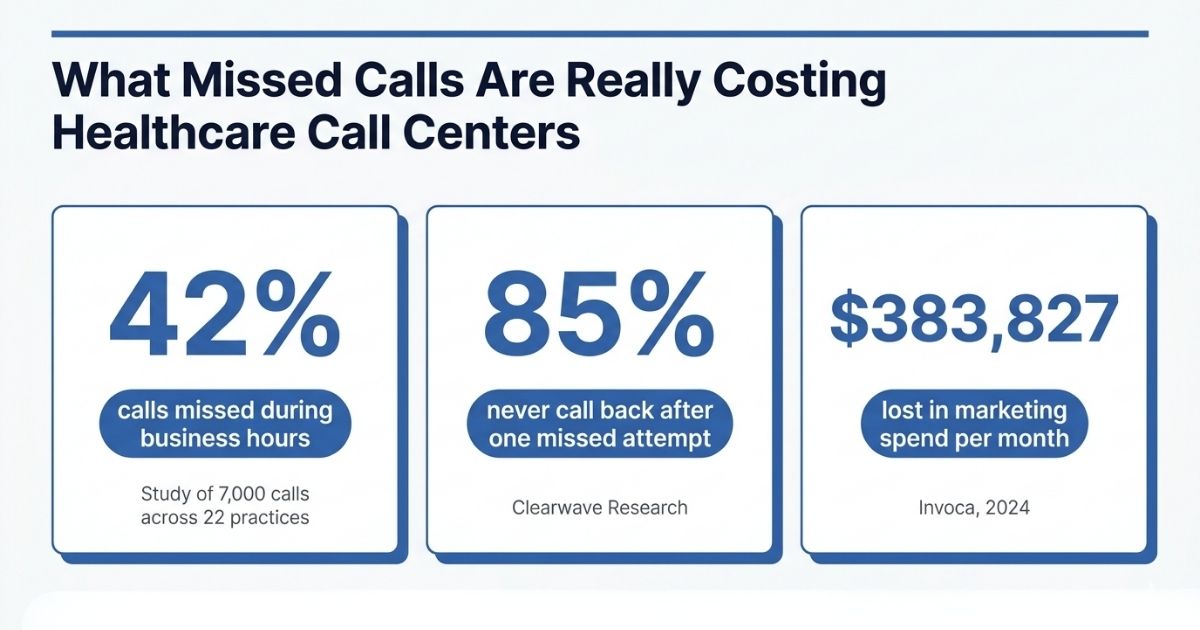
One Change. One Clinic. Measurable Difference.
A dental group operating across four sites introduced call tracking across all locations. Within two weeks, they identified that one branch was missing nearly a third of its Monday calls – all between 8:30am and 9:15am, before the second receptionist arrived. A 45-minute shift adjustment fixed it. That branch’s weekly appointment bookings increased without a single extra penny spent on advertising or staffingThe insight was always there. It just needed to be captured.What Actually Matters in a Call Tracking Tool for Healthcare in 2026
People often ask: what call tracking software is best for a medical or healthcare setting? The answer is simple: the one your team will actually use.Close to Real-Time Tracking – Not End-of-Day Reports
The most important differentiator between useful phone call tracking software and a glorified spreadsheet is how quickly the data reaches you.An end-of-day report that tells you twenty calls were missed is information. An alert that tells you a call was just missed – with the number, the time, and the option to call back immediately – is action.Patients booking appointments make decisions in real time. A fast callback changes the outcome. A slow one rarely does.Call Insights That Tell You What to Fix, Not Just What Happened
A call tracking platform data does not just describe the past – it points at the future.Which call handler has the highest booking conversion rate? What does their call pattern look like versus a lower-performing colleague? At what point in the call do patients typically disengage? Are there certain days when your missed call rate spikes consistently?These are operational questions that healthcare managers should be asking – and that strong call tracking data makes answerable. The answers improve scheduling and appointment outcomes.You can also explore how alerts translate into measurable performance gains in our guide on How Alerts Support Proactive Management in Cloud–Based Call Systems”How Appointment Outcomes Actually Improve – Step by Step
How does call tracking software improve appointments in practice? Here is the sequence, stripped of jargon.1. Every inbound call is logged – including the ones that go unanswered.2. Missed calls trigger close-to-real-time alerts so staff can respond fast.3. Quick callbacks recover appointments that would otherwise have been lost.4. Call data is reviewed regularly – by time, by handler, by location.5. Patterns emerge: peak miss times, long hold points, conversion gaps.6. Operational changes are made based on evidence, not assumption.7. Appointment conversion improves – and the data shows exactly why.They require visibility. That is the only thing that changes first.What Healthcare Teams Should Demand From a Call Tracking Tool
Not every tool on the market is built with healthcare call centers in mind. Here is what separates a useful one from one that gets ignored after month two.– Simple enough for front desk staff to use without any training curve– Close to real-time missed call alerts – not daily summaries– Caller history – so staff know if this person has called before– Location-level data for practices with more than one site– Clear, readable dashboards – not analyst-grade exports that nobody opens– Reliable uptime – because a call tracking tool that lags is worse than no toolThe right tool does not feel like a surveillance system. It feels like finally being able to see what your team has been dealing with – and knowing exactly where to help.If You Are Still Estimating Your Missed Call Rate, That Is the Problem
Healthcare call centers that use the best call tracking software do not guess at their conversion rates. They know them. They know which location performs best on Monday mornings. They know how long a patient will hold before hanging up. They know which callbacks convert and which come too late. That level of clarity is what separates a reactive call center from one that is consistently improving its appointment outcomes.Callation is built for exactly this.It is a simple, close-to-real-time call tracking software solution designed for teams who need clear answers fast without complexity.If you want to see how this works in your environment, contact us to learn how your team can turn missed calls into measurable outcomes.Frequently Asked Questions
They create hidden gaps. Patients who cannot get through often do not try again. Tracking shows the real loss.
Logs show activity. Tracking shows full behaviour - wait time, drop-offs, and callbacks.
Yes. Clear data helps staff adjust naturally without extra training.
Because of poor timing. Call spikes are not matched with coverage.
Yes. Even a few recovered calls can increase weekly bookings.