
Hybrid Cloud vs Multi-Cloud: What’s Right for You?
Table of Contents
The Cloud Choice Most Businesses Get Wrong
In Australia, Cloud adoption has ramped up in a hurry. A lot of companies have already put something in the cloud, but because they did not want to spend money, they are now standing at a crossroads.
To cloud or not to cloud, is that the question?
Or should you spread work between several cloud providers?
Here’s where the question of hybrid cloud vs multi-cloud comes into play. Picking the wrong model could keep you locked into higher costs, potential security problems or systems that just don’t scale with your business.
This guide does a good job at breaking it down in simple terms (i.e., without all of the hype), so you can select the model that works for your technology, compliance and growth plan.
What Is Hybrid Cloud?
A Hybrid cloud combines on-premises or private cloud infrastructure (that could be privately owned servers, old systems, etc.) with public cloud services like AWS or Azure.
There are secure integrations that transport data and workloads between these environments.
Simple example
An Australian finance company stores sensitive customer data on-premises for compliance reasons and runs analytics, reporting or a self-service customer portal in the cloud.
Why businesses choose hybrid cloud
- Regulatory or data residency requirements
- Heavy investment in legacy systems
- Gradual cloud adoption strategy
- Greater control over sensitive workloads
A strong hybrid cloud strategy often focuses on balance modernising without disrupting core systems.
What Is Multi-Cloud?
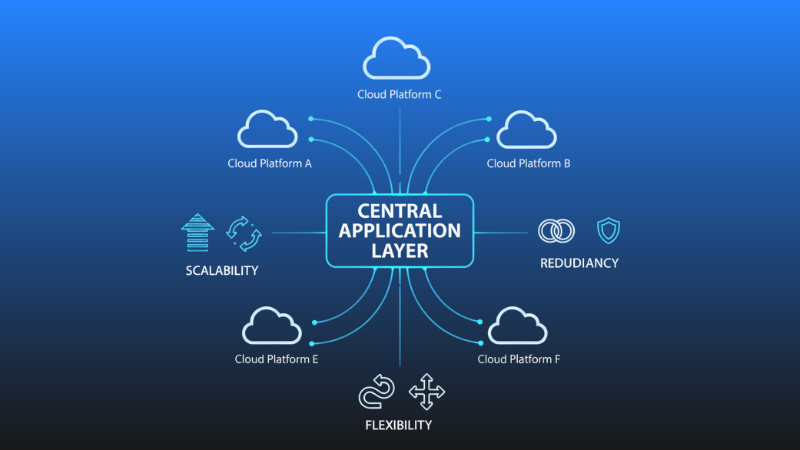
A multi-cloud architecture uses two or more public cloud providers, for example, AWS for infrastructure and Azure for enterprise applications. There is no on-premise dependency by default.
Simple example
A SaaS company runs its application backend on AWS, uses Azure Active Directory for identity, and deploys analytics on Google Cloud.
Why businesses choose multi-cloud
- Avoiding vendor lock-in
- Accessing best-of-breed cloud services
- Improved redundancy and uptime
- Global scalability
Many Australian tech teams work with AWS or Azure consulting partners to design secure, interoperable systems across platforms.
Hybrid Cloud vs Multi-Cloud: Core Differences That Matter
|
Area |
Hybrid Cloud |
Multi-Cloud |
|
Infrastructure |
On-prem + public cloud |
Multiple public clouds |
|
Legacy systems |
Fully supported |
Often refactored or replaced |
|
Compliance |
Strong data control |
Requires advanced governance |
|
Complexity |
Moderate |
High without strong architecture |
|
Flexibility |
Medium |
Very high |
|
Best for |
Traditional enterprises |
Digital-first organisations |
Both models can work brilliantly or poorly depending on execution.
Benefits of Hybrid Cloud (When It Makes Sense)
Hybrid clouds are not outdated. It’s practical when done right.
Key advantages
- Smooth legacy system modernisation in Australia initiatives
- Better compliance control for regulated industries
- Reduced risk during cloud migration
- Predictable performance for critical workloads
Hybrid cloud works especially well when paired with cloud migration services Australia that focus on staged transformation rather than “lift and shift.”
Benefits of Multi-Cloud (When It Wins)
Multi-cloud shines when agility and scale matter more than legacy constraints.
Key advantages
- No single-vendor dependency
- Optimised cost management per workload
- High availability across regions
- Faster innovation using specialised services
This approach is popular with companies building cloud based custom software , especially in SaaS and digital platforms.
Which Industries Prefer Hybrid Cloud?
Hybrid cloud remains dominant in sectors where risk and compliance come first.
Common hybrid cloud users
- Banking and financial services
- Healthcare and aged care
- Government and education
- Manufacturing with on-site systems
These organisations often combine hybrid infrastructure with cloud consulting Australia services to modernise safely.
Which Industries Prefer Multi-Cloud?
Multi-cloud is a strong fit for growth-driven, cloud-native businesses.
Common multi-cloud users
- SaaS startups
- E-commerce platforms
- Media and streaming services
- Technology and fintech companies
Many of these businesses also invest in SaaS development Australia to build scalable products from day one.
The Old Way vs the Modern Cloud Approach
Old way
- Single data centre
- One cloud vendor
- Rigid infrastructure
- Slow scaling
- High downtime risk
Modern way
- Distributed cloud services
- Hybrid or multi-cloud architecture
- API-driven integrations
- Elastic scaling
- Built-in resilience
The modern approach isn’t about “more cloud.” It’s about better architecture.
Cost, Security, and Complexity: The Real Trade-Offs
Cost
Hybrid cloud can be cost-efficient short term, especially if you already own infrastructure. Multi-cloud may reduce long-term risk but requires careful cost governance.
Security
Hybrid offers tighter control. Multi-cloud relies on strong identity, encryption, and monitoring across platforms.
Complexity
Hybrid adds integration complexity. Multi-cloud increases considerations of complexity. Neither is “simpler” by default.
This is why many organisations start with a cloud audit before committing.
How to Choose Between Hybrid and Multi-Cloud
Ask these questions honestly:
- Do we rely on legacy systems that can’t be retired yet?
- Are we subject to strict Australian data regulations?
- Do we want freedom from a single cloud vendor?
- Is our team equipped to manage complex cloud environments?
- Are we building a product or supporting internal operations?
Your answers usually point clearly in one direction.
Where Cloud Strategy Often Goes Wrong
- Choosing architecture based on trends, not needs
- Migrating without refactoring applications
- Ignoring long-term operational complexity
- Treating cloud as purely an IT decision
Successful cloud strategy connects technology, business goals, and compliance not just infrastructure.
Final Thoughts: Strategy First, Cloud Second
Hybrid cloud and multi-cloud are both powerful. The mistake is treating them as products instead of strategic frameworks.
The right choice depends on:
- Your systems today
- Your growth plans tomorrow
- Your risk tolerance
- Your internal capabilities
Before committing to either path, many Australian organisations start with a cloud audit to assess readiness or build a SaaS MVP to validate their cloud strategy in real conditions.
Sometimes clarity is more valuable than speed.

FAQs
1. Is hybrid cloud better than multi-cloud?
Neither is better universally. Hybrid cloud suits regulated and legacy-heavy organisations. Multi-cloud suits digital-first businesses prioritising flexibility.
2. Can a business use both?
Yes. Some advanced architectures combine hybrid foundations with multi-cloud workloads, but this requires strong governance and expert design.
3. Is multi-cloud more expensive?
It can be unmanaged. With the right architecture and monitoring, multi-cloud can optimise costs per workload.
4. Do startups need a hybrid cloud?
Rarely. Most startups benefit more from cloud-native or multi-cloud models unless compliance demands otherwise.
5. When should we modernise legacy systems?
When maintenance costs, performance issues, or security risks start slowing growth. Many teams address this through phased modernisation instead of full replacement.