
Custom Software Development in Australia: How Real Businesses Are Solving Real Problems
Table of Contents

A few years ago, using ready-made software was enough for most businesses in Australia. Accounting tools, CRMs, and inventory systems everything came in a box, and companies learned to work around their limitations.
That’s no longer the case.
Local firms are growing. Rules change often. People expect more every day. Many teams in Australia find that old apps stop their growth. This is why they build their own software. It fixes real work issues. This is not just a trend.
This guide skips the tech talk and all the empty hype. It shows how real teams use custom apps to get work done. Why do firms pick these over tools anyone can buy? We explain that and point out when it is time to ditch basic software.
Who Actually Needs Custom Software?
Many people think only giant firms can afford custom software. The truth is that small and medium Australian firms often gain the most.
- Growing Businesses and Startups- Growing fast feels good until the daily work gets messy. Teams often get stuck using too many files and emails to stay on track. Custom tools put all your data in one easy spot. This stops the boring tasks that drain your time every day. It clears the path so small snags do not turn into big blocks.
- Businesses With “Unusual” Workflows- Some businesses don’t fit neatly into standard software categories and that’s not a bad thing. Whether it’s a unique service model, internal process, or customer journey, custom software supports the business as it is, not as a generic platform expects it to be.
- Teams Juggling Too Many Tools- Work slows down when your CRM and accounting tools do not talk. If your stock list sits in a spot you cannot reach, you lose time. Custom software links these tools like glue so facts flow well; this keeps you from typing things by hand.
- Regulated Industries- Australian banks and hospitals must follow very strict safety rules. Local government offices and schools also have to meet these very high standards. Basic software often fails to meet these tough safety needs. Building your own systems gives you full power over your private data and all your files. You can create better reports and decide exactly who can see the work.
- Businesses Thinking Long-Term- Off-the-shelf software can look cheaper at first. But monthly subscriptions, add-ons, workarounds, and inefficiencies quietly add up. Custom software focuses on what you actually need, nothing more, nothing less.
How Different Australian Industries Use Custom Software in Practice
Healthcare
Healthcare providers handle sensitive data, adhere to strict regulations, and navigate complex daily operations. Many clinics and organisations find that generic systems don’t reflect how they actually work.
- Custom healthcare software is commonly used for:
- Patient management systems designed around real clinic workflows
- Secure telehealth platforms
- Appointment booking and automated reminders
- Connecting medical devices, databases, and reporting tools
Because healthcare requirements constantly evolve, ongoing updates and maintenance aren’t optional; they’re essential.
Finance and Banking
In finance, there’s no room for error speed, accuracy, and security matters every single day.
- Custom software helps financial organisations by:
- Streamlining client onboarding and verification
- Monitoring risk and compliance
- Detecting unusual activity and potential fraud
- Providing real-time dashboards for decision-makers
Well-built API integrations allow these systems to securely communicate with payment gateways, regulators, and third-party platforms.
Retail and e-Commerce
Australian retailers often operate across physical stores, websites, and online marketplaces simultaneously. Managing everything through separate tools quickly becomes overwhelming.
- Custom software allows retailers to:
- Keep inventory synced across all channels.
- Personalise the customer experience.
- Integrate payments, shipping, and CRM systems.
- Understand buying behaviour through meaningful data.
Instead of relying on dozens of plugins, one tailored system can handle operations more cleanly and reliably.
Government and Public Sector
Public sector organisations manage massive amounts of sensitive data and long-term systems that must remain reliable for years.
- Custom software supports:
- Citizen-facing service portals
- Case and records management
- Secure data handling
- Analytics for planning and reporting
Because these systems are built to last, scalability and long-term maintenance are key priorities.
Education
Education is no longer limited to classrooms and paper records. Institutions need systems that support modern learning while keeping administration efficient.
- Custom software is used for:
- Learning management systems
- Student information platforms
- Online assessments and reporting
- Virtual classrooms and collaboration tools
As education models change, custom systems allow institutions to adapt without starting from scratch.
Related Blog- Why Custom Software Development Is the Solution to Better Business Solutions
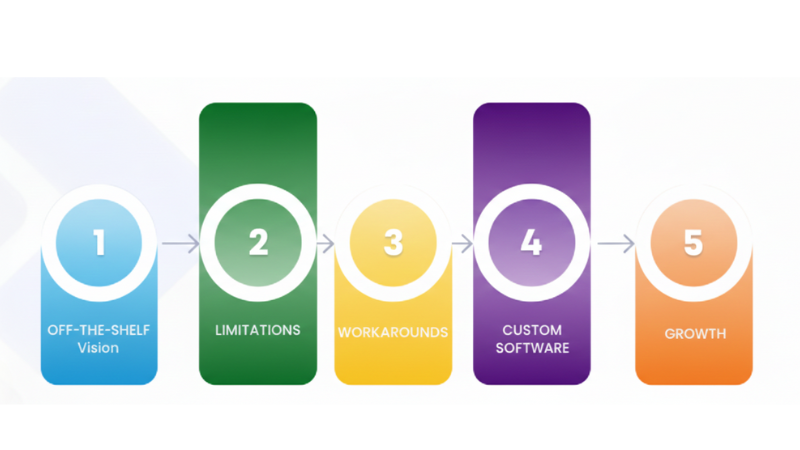
Why Many Businesses Outgrow Off-the-Shelf Software
Off-the-shelf software is built for the broadest possible audience. That’s useful until it isn’t.
As businesses grow, they often face:
- Features they don’t use but still pay for
- Missing functionality they can’t add
- Poor integration with other tools
- Limited control over data and security
Custom software avoids these problems by focusing only on what matters to the business. With regular updates and improvements, it stays relevant instead of becoming a limitation.
So, Is Custom Software the Right Choice?
Custom software fixes the issues that slow your team down. It helps you get ready for what comes next in your field. You do not have to swap every tool at once start small. Focus on building things that fit the way you work. If your current tech forces you to use messy tricks, change it. Stop settling for tools that make your life harder.
Conclusion
Throughout Australia, healthcare companies, banks, shops, developers and educators are increasingly opting for customised software for one simple reason: their existing solutions are no longer meeting their needs. Growth introduces new demands, rules go out of date quickly and customers want more seamless experiences faster. When the everyday systems starts to get in the way, rather than support them, change is necessary.
Instead of comparing custom software to off-the-shelf solutions in terms of being “better” the more pragmatic question is. Do the systems you use today reflect how your business operates today? And can they support you where you want to be in five years?
For most companies, the answer is no. Custom software is not about following the latest trends or developing technology for technology’s sake. It’s removing friction, simplifying the work, building systems that scale with your business rather than stop it from scaling.
FAQs
1. How do I know if off-the-shelf software is no longer right for my business?
If your team relies on workarounds, manual data entry, extra plugins, or multiple systems that don’t integrate well, it’s often a sign you’ve outgrown basic software.
2. Is custom software secure enough for regulated industries?
Yes. In fact, custom software is often more suitable for regulated industries like healthcare, finance, and government because it allows full control over data, access levels, and compliance requirements.
3.Does custom software replace all existing tools at once?
Not at all. Many businesses start small by building one custom system or integration, then expand over time as needs grow.
4. Is custom software more expensive than off-the-shelf software?
While the upfront investment is higher, custom software often reduces long-term costs by eliminating ongoing subscriptions, unused features, and inefficiencies.
5. How long does custom software take to build?
Timelines depend on the scope and complexity. Simple systems can be developed quickly, while larger platforms are built in phases to deliver value early.