
Tech Consulting for Startups: How to Manage Technical Debt
Table of Contents

You are moving fast. You launched your product, secured your first users, and are now looking at the next growth phase. But there is a silent killer in your codebase: technical debt. Many founders ignore it until the product breaks or development crawls to a halt. This is where tech consulting for startups becomes your most valuable investment.
Engaging a professional tech consulting company early stops you from wasting runway on the wrong tools. It turns your tech from a cost centre into an asset. This guide shows you how to manage your debt and build a foundation that scales sustainably.
Understand the debt trap
Technical debt is the cost of choosing speed today over perfect architecture tomorrow. You take a shortcut to ship a feature. You save a week of time now. That means:
- You accrue “interest” on that shortcut.
- Every future feature built on that code takes longer.
- Your codebase becomes brittle and hard to change.
Most startups start with high debt. That is normal. You need to ship an MVP to see if your business works. The problem starts when you stop paying that debt back. You end up in a cycle where you are only fixing bugs instead of building value.
How to spot "toxic" debt
Not all debt is created equal. Some debt is a strategic decision to trade quality for market speed. Toxic debt is different. Toxic debt is sloppy code that slows down every new feature request.
Watch for these warning signs:
- Feature friction: A simple feature takes three times longer to build than it did last month.
- The “hero” culture: Only one developer knows how a core part of the system works.
- Bug loops: You fix a bug, but it reappears in a different part of the system.
If you see these signs, your architecture has become a liability. You need a custom software development company to help you audit your current setup. You need to stop the bleeding before it affects your customers.
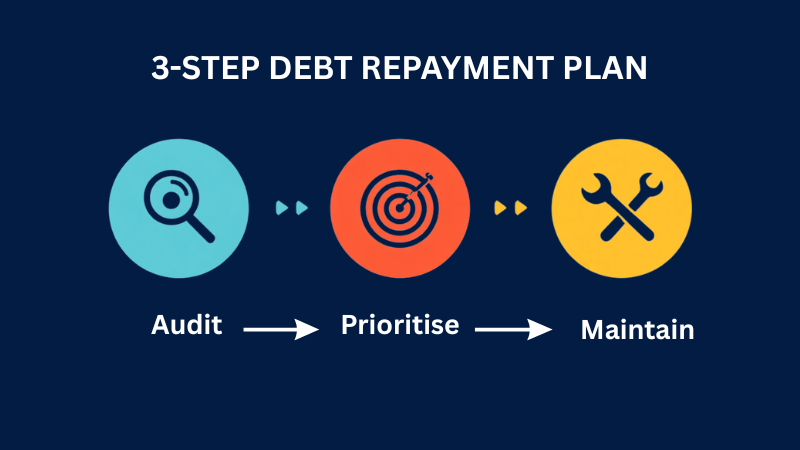
The 3-step debt repayment plan
You cannot fix everything at once. You need a systematic approach to cleaning your architecture. Use this plan to regain control.
1. Audit your bottlenecks
You need a clear map of where your code is failing. Do not guess. Look at your version control history. See which modules require the most frequent bug fixes.
That is where your debt lives. Bring in a professional custom software development Sydney team to review your code. They see the patterns you are too close to notice. An objective audit identifies which components need refactoring and which ones you can leave alone.
2. Prioritise based on impact
Not all code needs to be perfect. Prioritise your fixes using a simple matrix. Focus on the core business logic first.
- High impact/High debt: Refactor these parts immediately. This is your foundation. If it is broken, everything else will eventually break too.
- Low impact/High debt: Accept the debt for now. It is annoying, but it does not stop you from shipping.
- High impact/Low debt: Keep these parts clean as you go.
3. The “One-Week-in-Four” rule
You need to build in time for maintenance. If you only focus on new features, your debt will compound until you reach a total standstill.
Dedicate 25% of your development cycle to cleaning up code. This includes writing automated tests, updating documentation, and refactoring legacy modules. This is not “wasted” time. This is an investment in your future velocity.

Why you should engage a technology consultancy
Startups often get “architecture blind.” Your internal team might be so focused on shipping that they cannot see the structural issues growing in the background.
Engaging a technology consultancy provides a fresh set of eyes. These experts have seen hundreds of startups scale. They know how to spot the specific technical bottlenecks that kill growth.
A high-performing tech consultancy service does not just point out your problems. They help you build a plan to fix them. They work with your team to implement robust integration services that connect your tools more efficiently, removing manual work that creates further debt.
Choosing the right development partner
Sometimes, your internal team is at capacity. You need extra hands to clear the debt while your team continues to build. When you search for a custom software development company, look for more than just coding skills.
You want a partner who understands the business impact of the code they write. Ask yourself:
- Do they communicate technical risks clearly?
- Are they willing to document their process so your team can maintain it?
- Do they have a track record of supporting startups through the “scale-up” phase?
A reputable custom software development firm will treat your product like their own. They will help you implement secure hosting solutions to ensure that while you clean up your code, you are not leaving any security backdoors open.
The link between hosting and debt
You might think technical debt is only about code. It is also about your infrastructure. If you are still managing your own servers or using outdated hosting, you are creating massive amounts of “operational debt.”
Managed services allow you to offload the maintenance to experts. This ensures your infrastructure is always patched and optimised. It lets you focus on building features rather than managing server logs.
If your stack is complex, look for managed cloud hosting solutions. These allow you to scale your infrastructure automatically as your traffic grows. You stop spending time on server configuration and start spending time on your core value proposition.
Avoiding debt in your next project
Refactoring old code is hard. Building new features correctly from the start is easier. When you plan your next major release, involve an IT tech consultant during the design phase.
They can help you architect modularity. Use containerisation and microservices where appropriate. This prevents your next project from becoming the “legacy debt” of 2027.
If you are planning to build new tools, look for a custom web application development company that focuses on “future-proof” design. They ensure your new code is decoupled, tested, and documented. This builds a clean layer on top of your existing system.

Build a sustainable culture
Technical debt is as much a cultural issue as it is a technical one. If you reward speed over quality, your team will take shortcuts.
Create a culture where cleaning code is seen as “shipping.” When a developer refactors a module to make it 20% faster, celebrate that. When your team writes documentation, treat it as a core part of the feature delivery.
Consistency is your best defence.
Stop guessing and start acting
You have the roadmap. You know that managing technical debt is about risk management. It is about building a business that can move fast for years, not just for months.
Start your audit today. If you feel like your product speed has stalled, you are likely dealing with more than just a few bugs. A fresh audit could save you months of expensive rework.
If you are ready to clean up your architecture and build a foundation that scales, review your strategy today. Revisit our foundational guide to see how your stack stacks up: Tech Consulting for Startups: How to Set Up Your Technology Stack From Day One.
Summary Checklist for Founders
- Identify: Track which features take the longest to build and why.
- Audit: Bring in a tech consultancy service to verify your structural blind spots.
- Prioritise: Focus your refactoring on core business components.
- Allocate: Dedicate 25% of all development cycles to maintenance.
- Standardise: Use modern custom software solutions and managed infrastructure to reduce operational overhead.
You are building a business. Make sure the foundation can handle the weight of your success. Start cleaning your debt today, or pay the price tomorrow.

FAQs
1. How do I tell if my tech debt is actually a problem?
If your team spends more time fighting the system to get updates out than actually building new features, you’re in trouble. When simple tasks start taking way longer than they used to, it’s a clear sign your technical debt has become an anchor on your growth.
2. Why hire a consultant instead of just another developer?
Developers are great at building, but a consultant is more like an architect. They look at your long-term roadmap and show you how to avoid painting yourself into a corner. You’re paying for their experience so you don’t have to learn those expensive lessons the hard way.
3. When is the right time to reach out to an advisor?
The sooner, the better ideally before you’ve written a single line of code. If you’re already in the thick of it and things are starting to feel shaky, bring someone in now for an audit. It’s much cheaper to fix a weak foundation early than to rebuild the whole house later.
4. Will tech consulting eat up my entire budget?
Not necessarily. Most founders don’t need a massive team of retainers. You can usually hire a consultant for “fractional” work, where you get a few hours of high-level advice to keep your team on track. It’s a smart way to get senior-level help without the massive price tag of a full-time hire.
5. Should I build from scratch or just buy something off the shelf?
If it’s a standard task like payroll or email, just buy an existing tool and move on. Only pay for custom software when it’s for your “secret sauce” the specific features that make your product stand out and solve your customers’ problems better than anyone else.