
How Much Does Custom Software Development Cost in Melbourne?
Table of Contents

Ask five software development companies in Melbourne what a project costs and you’ll get five different answers, most of them vague on purpose. Businesses land on our site after reading articles that either throw out a number so wide it’s meaningless or skip pricing altogether and push straight to “book a call.” Neither actually helps you work out if the investment stacks up.
So here’s the straight version.
Software development cost in Melbourne typically starts around $15,000 for a simple internal tool and climbs past $200,000 for a full SaaS platform or enterprise system. Where your project lands depends on a short list of factors, and once you understand them the number stops feeling like a guess.
What custom software development actually costs in Melbourne
Before getting into what pushes the price up or down, here’s the rough shape of software development cost in Australia by project size:
- Simple projects: $10,000–$50,000
- Mid-size projects: $50,000–$150,000
- Enterprise solutions: $150,000+
These bands reflect real scope: how many features, how much business logic, how many systems need to talk to each other.
Melbourne software development services cost more per hour than offshore teams. That’s just a fact. But businesses that go offshore purely to save money often pay twice, once for the build and again when it needs fixing. Communication gaps, missed requirements and timezone delays eat the savings fast.
What actually drives the cost of developing software in Melbourne
Five things move the number more than anything else.
Feature complexity. A basic internal tool is a different job entirely from a platform with dynamic pricing, multi-role permissions and real-time data. Cost scales with how much logic sits under the hood, whether that’s bespoke CRM and ERP systems, a customer portal, or a full SaaS platform build.
UI/UX design- Generic templates are cheap. An interface that actually cuts training time and fits how your team works takes real design effort, and it’s one of the software development pricing factors people underestimate until they see the difference in adoption.
Integrations- Connecting your software to a payment gateway, accounting platform, or existing CRM adds scope. Systems integration and secure API integration can be clean and well-documented, or painful. Either way, it costs time, and time costs money.
Technology stack- Scalable cloud hosting infrastructure and maintainable architecture cost more upfront than a quick build. Shortcuts on tech decisions tend to surface at the worst possible moment, usually right when you’re trying to grow.
Who’s building it? An experienced custom software development agency that asks hard questions before writing a line of code delivers something very different to a junior team working off a vague brief. Experience costs more per hour and, more often than not, less overall.
Any one of these can shift the price by two to five times. That’s not padding. It’s just how variable software scope is.
Why custom software development costs what it does
Because none of it is pre-built.
When you’re pricing custom software development in Australia, you’re paying someone to understand your specific business problem, design around it, build and test it properly, and keep it running afterwards. A SaaS product splits that cost across thousands of customers. With custom application development services, you’re the only customer, but you own everything you build.
That trade-off is the whole point, and for the right business it’s the right one.
Is the cost of developing software in Melbourne worth it?
For some businesses, not yet. If a $50-a-month SaaS tool covers what you need, use it.
Custom software solutions start making sense when:
- You’re running several disconnected tools that still don’t cover everything
- Your team is manually doing things that should be handled through business process automation
- Off-the-shelf software keeps hitting limits every time you try to scale
- You’re paying for features you’ll never touch and missing the ones you actually need
The businesses that get the best return don’t treat the cost of custom software design and development as an expense. They think about what it costs them not to build it: wasted hours, manual errors, and growth they can’t capture with the tools they’ve got.
The hidden costs of custom software development
Most cost breakdowns stop at the build. That’s only half the picture. When planning for ongoing technology costs, plan for:
- Maintenance: 15–25% of the build cost per year
- Cloud application development and hosting: ongoing, scales with usage
- Infrastructure upgrades as your user base grows
- Feature additions, because no business ever stops needing changes
None of this is a dealbreaker. It’s just worth knowing upfront so there are no surprises six months after launch.
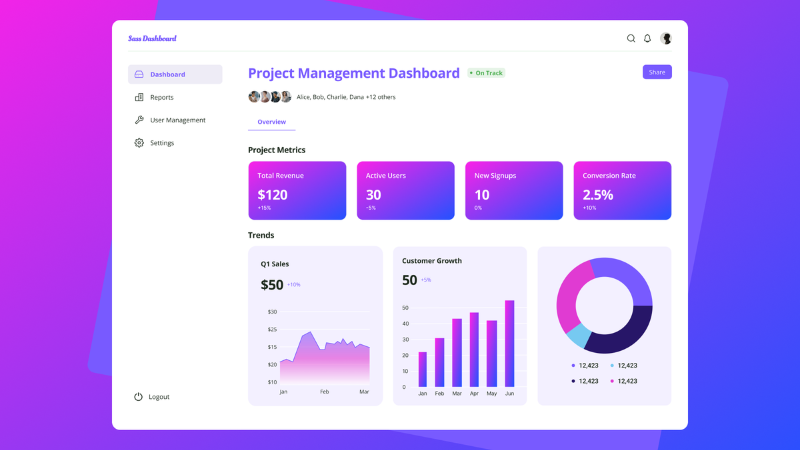
Custom software vs SaaS: running the real numbers
SaaS wins on day one. Lower upfront cost, no build time, ready to go.
Stretch the timeline out, though. Software subscriptions running at $2,000 a month add up to $120,000 over five years, for tools you don’t own, can’t fully adapt to your workflows, and could lose access to if the vendor changes pricing or direction.
The cost of a SaaS platform development project or a custom business system looks very different against that backdrop. It’s not always the right call, but it’s worth running the maths before defaulting to a subscription forever.
How to reduce software development costs without cutting corners
Start with an MVP. Build the core first. Real user feedback after two months of use tells you more than six months of internal planning.
Front-load the discovery work. Vague requirements are expensive. Every gap in a brief becomes a cost somewhere in the build. Proper planning upfront, run through agile methodology with a dedicated project manager, is one of the most effective ways to bring the number down later.
Don’t pick purely on price. The lowest quote in Melbourne usually signals the least experience, the fewest questions asked upfront, and the biggest budget blowouts down the track.
What to look for in a software development company in Melbourne
Portfolio matters, but it’s not the whole picture. When evaluating a custom software development company, look for whether they:
- Ask about your business goals, not just your feature list
- Can explain their process without drowning you in jargon
- Talk about quality assurance and what happens after launch
- Are willing to tell you what you don’t actually need
Basecode works this way with clients across government and public sector, healthcare, finance and e-commerce, covering everything from workforce scheduling tools to quality management systems and secure web-based applications. The best teams push back on bad ideas. That’s not a red flag, it’s exactly what you’re paying for. The ones who agree with everything upfront tend to deliver the most surprises at the end.
Bottom line on the cost of developing software in Melbourne
The number is real and worth taking seriously. But the more useful question is whether the software will make your business run better, scale without breaking, or save more than it costs over time.
If the answer’s yes, the cost of developing software in Melbourne isn’t an expense. It’s a return that just takes a little time to arrive.
Want a straight answer for your specific project?
Basecode offers free 30-minute audits for Melbourne businesses looking at custom software development. No pitch, just a clear read on what you’d need to build, what it would likely cost, and whether the timing makes sense.

FAQs
1. How much does custom software cost in Melbourne?
Most projects land between $15,000 and $250,000. Simpler internal tools sit at the lower end. Anything with multiple user types, integrations, or complex logic will push the number up. The most important variable is how clearly you can define what you need.
2. What has the biggest impact on cost?
Feature complexity, design quality, third-party integrations, technology choices, and the experience level of the team. Any one of these can double your budget if you’re not careful.
3. Is custom software cheaper than SaaS in the long run?
Often, yes, especially once you’re past the two or three year mark. You stop paying recurring fees, you own the system, and you’re not dependent on someone else’s roadmap.
4. How long does it take to build?
Anywhere from two months for a focused MVP to nine months or more for a complex platform. Timeline is mostly driven by scope and how decisive you can be during the process.
5. What ongoing costs should I plan for?
Maintenance, hosting, security updates, and feature additions. These aren’t optional, they’re just part of running software. Budget for them from the start and you won’t be caught off guard.